Armor Helmets: Selection, Uses and Display Guide
Compare helmet forms, finishes, supports and display scale while keeping historical replicas distinct from fantasy designs.
Maritime displays, historic replicas and dramatic interiors: measured advice for choosing statement pieces and presenting them with care.
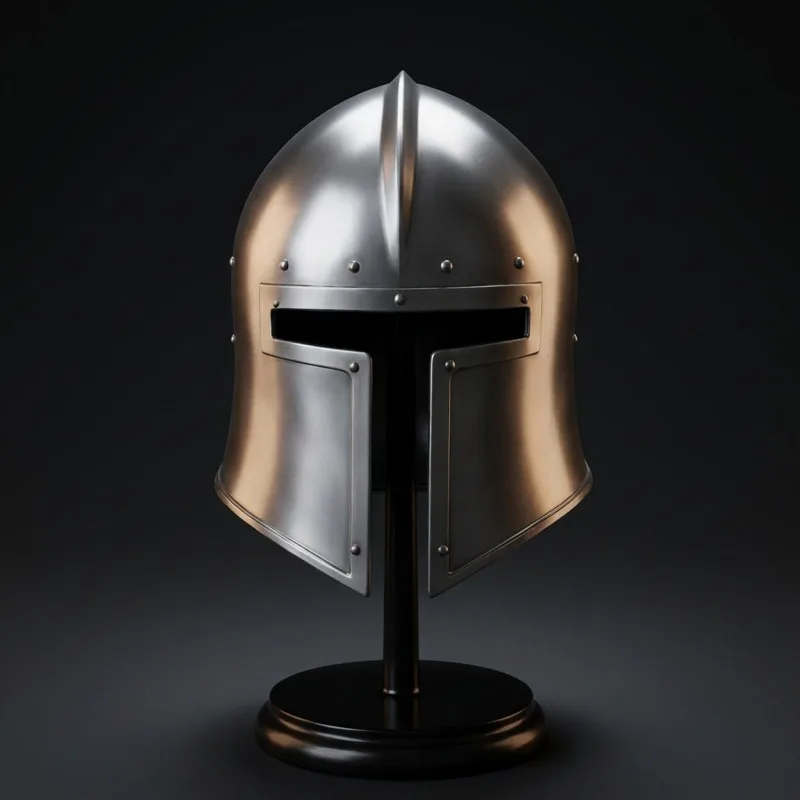
Compare helmet forms, finishes, supports and display scale while keeping historical replicas distinct from fantasy designs.
Compare helmet forms, finishes, supports and display scale while keeping historical replicas distinct from fantasy designs.
Choose a decorative shield by size, shape, surface, wall support and the visual role it will play in a room.
Plan a full armor display around verified components, overall space, support, handling and a clear distinction between costume and protection.
Compare brass-handle walking sticks by motif, surface, shaft material and how the handle will read in a retail or home display.
Plan scale, support and interpretation when selecting miniature or larger diving helmet reproductions for an interior or retail display.
Compare a full armor silhouette with a torso-led display by measuring height, footprint, support points and assembly access.
Use observable features and careful wording to distinguish historically inspired helmet forms from fantasy styling.
Use viewing distance, furniture dimensions and handling needs to choose the right scale for a decorative diving helmet.
Choose a tripod searchlight by room scale, finish, placement and the lighting role it should play in a maritime or industrial interior.
Plan where a tripod searchlight will stand by measuring the complete lamp, its leg spread and the surrounding sightlines.
Compare Norse-inspired and Crusader-themed shield designs by outline, motif, colour and the space needed for safe wall display.
Compare decorative walking sticks by handle shape, shaft material, length, construction and intended display or mobility context.